
Relocation volume can fluctuate for many reasons, including changing business priorities, economic conditions, hiring patterns and cost pressures. However, a decline in mobility activity may have broader implications than simply moving fewer employees. Over the past 6-12 months, significant changes have swept across Relocation Management Companies. Our in-depth analysis reveals that these shifts are primarily driven by four key factors. These factors are reshaping the industry landscape and influencing how services are delivered. Understanding these drivers is crucial for adapting and thriving in this evolving environment.
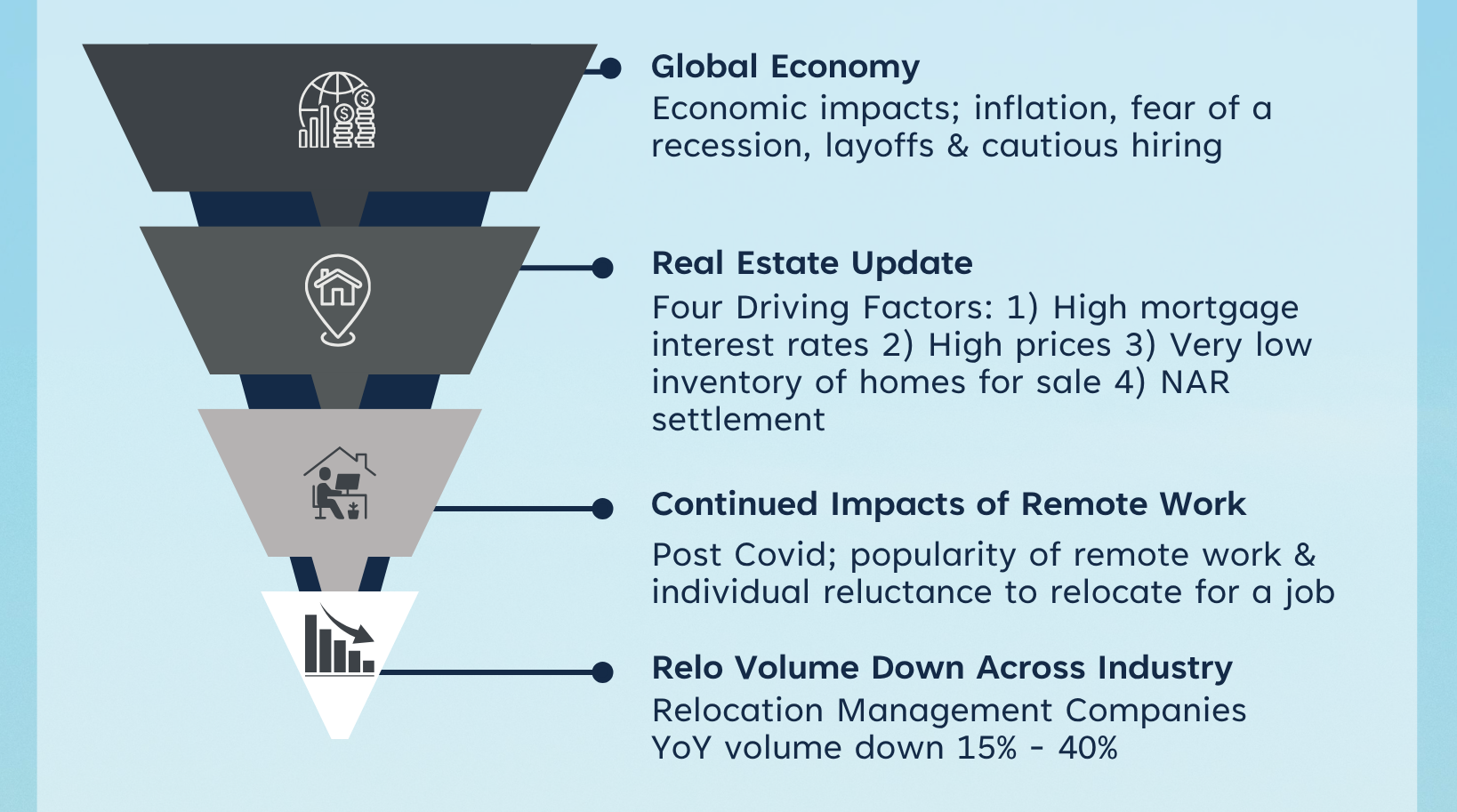
Here are three areas to consider when relocation volume begins to decline.
1. Decreased Demand for Services
Economic impacts such as inflation, fear of recession, layoffs, and cautious hiring directly affect corporate budgets and willingness to relocate employees. Companies may reduce their workforce mobility programs or put them on hold, leading to a decrease in demand for relocation services. This is reflected in the reported year-over-year volume decline of 15% to 40%. Relocation Management Companies would consequently see reduced revenue from fewer relocation assignments.
2. Shift in Service Offerings
The popularity of remote work and individual reluctance to relocate for a job indicate a shift in the type of services demanded. Companies may pivot towards offering more flexible solutions that accommodate remote work arrangements or provide virtual relocation support rather than traditional physical relocations. This requires adaptation in service offerings to remain relevant and competitive in the evolving market landscape.
3. Financial Pressures
High mortgage interest rates, high prices of homes, and low inventory contribute to increased costs associated with relocation services. Companies may face higher expenses when assisting employees with home purchases or rentals in expensive housing markets. This can impact profit margins unless pricing strategies are adjusted or additional value-added services are introduced to justify higher costs to clients.
Look Beyond the Numbers
A decline in relocation volume is not automatically a sign of a problem. It is, however, an opportunity to evaluate whether your mobility program continues to support your organization’s evolving talent and business priorities.
Odyssey works with clients to review program activity, employee feedback and mobility trends to identify opportunities and ensure relocation benefits remain aligned with organizational goals.
Is your mobility volume changing? Connect with Odyssey to explore what your program data may be telling you.